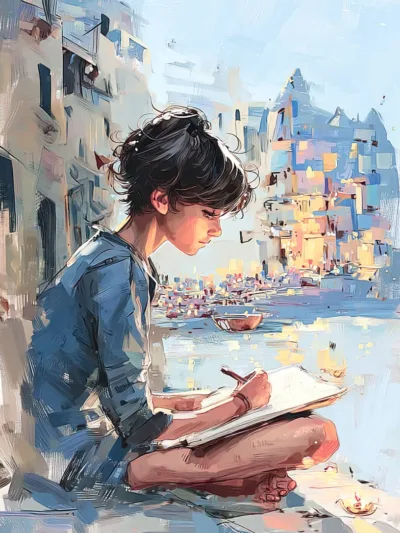
The Temple of Ownership
With hearts lightened by the lessons of humility, Tarkik and Aindri proceeded to their next destination, the Temple of Ownership. Nestled atop a hill, with a panoramic view of the surrounding landscape, the temple was a monument to the understanding of impermanence and non-attachment.
As they ascended the hill, the air grew crisper, and the sounds of the village below faded into a serene silence. The temple stood before them, its simple architecture belying the profound lessons it housed.
Upon entering, they found the interior adorned with paintings depicting various life stages and the possessions people cling to at each phase. The first painting showed a young child surrounded by toys, gripping them tightly.
Tarkik reflected, “Even as children, we’re taught to hold on to things, thinking they define our happiness.”
Aindri nodded, “But true joy isn’t in possession. It’s in the experience, in the moment.”
The next painting depicted a young adult amassing wealth and material goods, building a fortress of ownership around themselves. “It’s easy to believe that what we own, owns us,” Aindri remarked. “But it’s all transient, isn’t it?”
“Yes,” Tarkik said. “Like the seasons, our life stages change, and so do our needs and attachments.”
Further in, they came across a painting of an old person surrounded by mementos and keepsakes, each a memory of a time long passed. Tarkik observed, “In the end, these possessions are just reminders of moments. It’s the memory that matters, not the object.”
In the heart of the temple, they found a tranquil garden, at the center of which stood a tree, its branches sprawling wide and leaves rustling softly in the wind. Beneath the tree was a stone bench, and on it lay a scroll.
Unrolling the scroll, they read: “Everything in life is on loan from time. Cherish the moments, for the material fades away.”
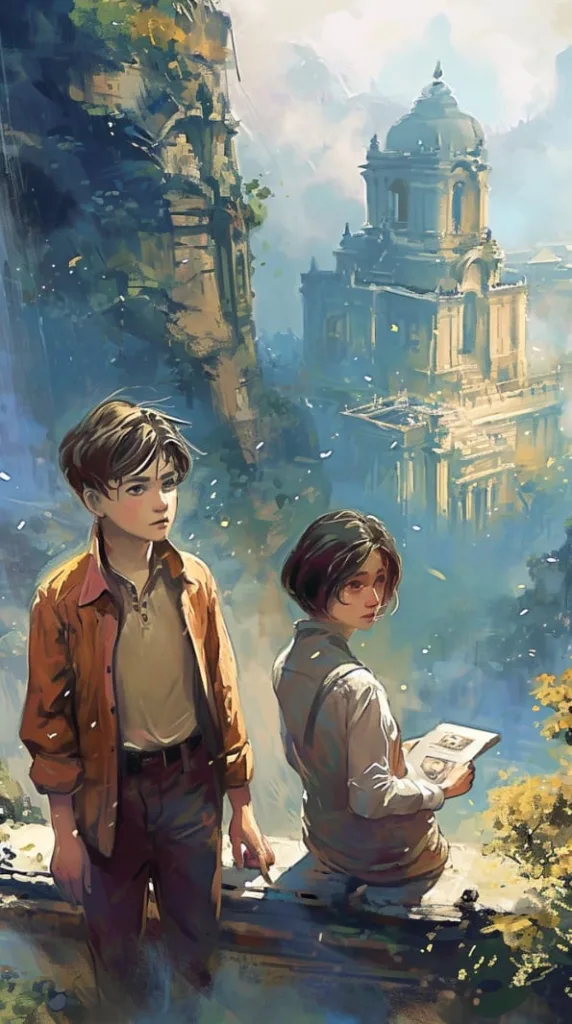
Tarkik and Aindri sat on the bench, taking in the view of the valley below, the village in the distance a mosaic of life’s impermanence. They discussed the paintings and their own attachments, realizing how these often clouded their appreciation of the present.
As they left the Temple of Ownership, their conversation lingered on the beauty of detachment and the freedom it brought. They understood that ownership was not about possessing things but about appreciating the temporary nature of all that life offers.
The chapter concludes with Tarkik and Aindri descending the hill, their minds at peace with the knowledge that in letting go, they were embracing the true essence of life. They looked forward to the final temple, ready to complete their pilgrimage with a newfound understanding of life’s ephemeral nature.