
The Temple of Desires
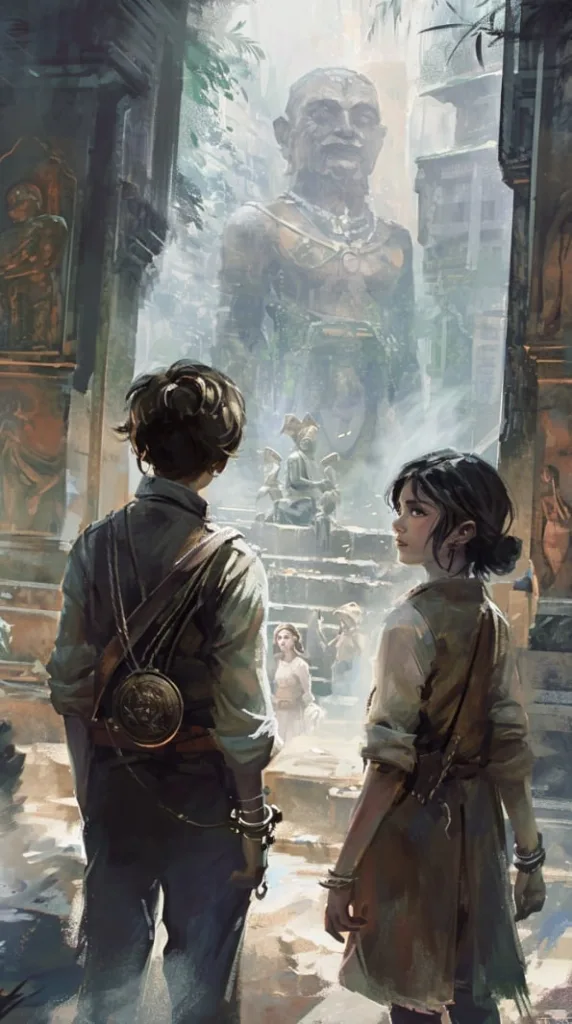
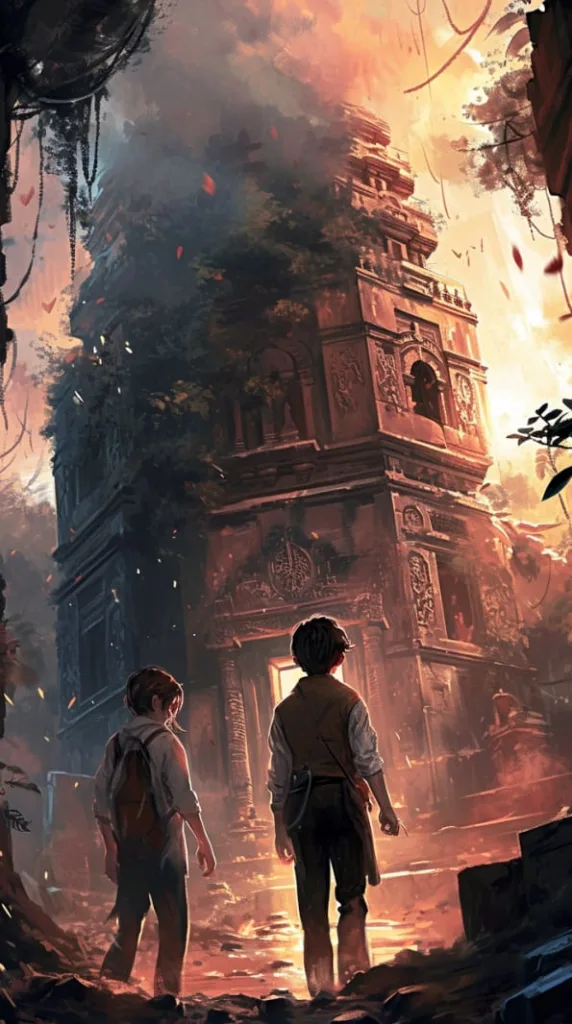
Tarkik and Aindri, guided by the ancient tome, made their way through the dense underbrush of the forest to reach the first temple on their pilgrimage, the Temple of Desires. This ancient temple, hidden away from the common paths, stood as a symbol of introspection and understanding of human desires.
Upon entering the temple, they found themselves in a large hall adorned with lifelike frescoes depicting scenes of human ambitions and desires. At the centre of the hall was a pedestal with an inscription: “To transcend desire, one must first understand it.”
The first challenge was not an illusion but a series of relics and texts scattered around the hall. Each relic represented a common human desire – wealth, power, love, and fame. Accompanying texts depicted stories and philosophies discussing the transient nature of these desires.
Tarkik picked up a relic symbolising wealth – a beautifully crafted ancient coin. The accompanying text spoke of a wealthy king whose riches could not buy him happiness or peace. Tarkik reflected on this, realizing that while wealth is necessary for survival, obsessing over it leads to an endless cycle of dissatisfaction.
Aindri examined a relic representing love – a pair of entwined figurines. The story beside it told of a poet who, despite experiencing deep love, found true peace only when he understood that attachment can lead to suffering. Aindri pondered over the delicate balance between loving others and attachment.
As they went ahead, and observed several relics, a new sense of wisdom dawned on them. They saw a relic signifying fame and recognition – a faded laurel wreath, a symbol of fame. The accompanying story told of a celebrated warrior whose fame became his prison, as he could never escape the public’s expectations, illustrating the fleeting and burdensome nature of fame.
Another relic indicated power and control – a sceptre lay on display. Its story was of a powerful ruler whose desire for control led to isolation and misery, underscoring that the pursuit of power often leads to solitude and despair.
As they moved through the hall, engaging with each relic and its story, Tarkik and Aindri confronted their perceptions and desires. They discussed and debated, learning from the ancient wisdom that these stories conveyed.
Reaching the inner sanctum of the temple, they found a serene space with a simple altar. On it lay a scroll with a verse echoing the teachings of Lord Krishna: “Desires, like the seasons, come and go. True peace resides in the one who observes them pass without attachment.”
Exiting the Temple of Desires, Tarkik and Aindri felt a profound sense of enlightenment. They had faced realistic embodiments of human desires, leading to a deeper understanding of the essence of detachment. Prepared for the next stage of their pilgrimage, they set forth, carrying with them the knowledge necessary to confront the remaining challenges.