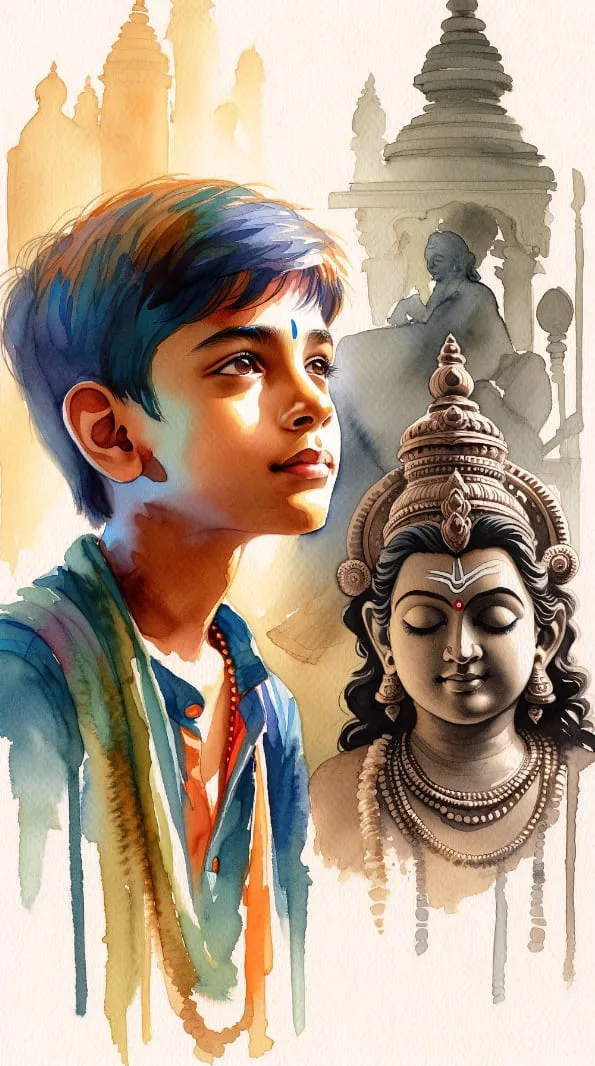


The Eighth Diya: Yathālābha Santosh (Divine Contentment)
As the eighth diya was lit, the room felt almost full of light. Dadi’s voice carried a lifetime of practice:
“Aathavam jathalabha santosha, sapanehu nahin dekhai paradosha” (आठवं जथालाभ संतोषा, सपनेहुं नहिं देखइ परदोषा)
“Contentment with what comes, never seeing faults in others, even in dreams,” she translated. “This saved my sanity during partition, beta.”
She returned to her seat, more slowly now, as if the night’s teachings were accumulating weight. “When we fled Lahore, we lost everything. Our haveli, burned. My father’s library of rare manuscripts, destroyed. jewelry passed down seven generations, looted. We arrived in Delhi with nothing but trauma.”
“How did you bear it?”
“At first, I couldn’t. I was sixteen, angry at everything—at God for allowing such violence, at humans for their cruelty, at fate for making us refugees. I made everyone around me miserable with my complaints and comparisons to our lost life.”
Dadi smiled ruefully. “Then I met an old woman in the refugee camp. She had lost not just property but her entire family—husband, sons, grandchildren. Yet she shared her single chapati with others and smiled while doing it. I asked her, ‘How can you be content with nothing?'”
“What did she say?”
“She said, ‘Child, I’m not content with nothing. I’m content with everything. The breath in my lungs, the ground beneath me, the sky above. These were always the only things I truly owned. The rest were temporary gifts. Now I see clearly—attachment to what can be lost causes suffering. Gratitude for what remains brings peace.'”
Dadi’s eyes grew distant. “She taught me to practice contentment not as resignation but as recognition. Every night, she made us name three things we still had. Soon, our lists grew—friendship, sunrise, the taste of water when thirsty. Contentment didn’t mean not working to improve our situation. It meant not poisoning our present with bitterness about our past.”
“But how do you not see faults when people do terrible things?”
“Not seeing faults doesn’t mean being blind to actions. It means understanding that every person acts from their own pain, ignorance, or fear. The people who killed during partition—they were poisoned by fear and propaganda. Seeing this didn’t excuse their actions but freed me from the burden of hatred. Hatred would have chained me to that train forever.”
PREVIOUS: The Seventh Diya: Sama Mohi Maya (Equal Vision)
NEXT: The Ninth Diya: Saral Sab San Chalhina (Simplicity and Sincerity)