

The Fourth Diya: Guna Gana (Celebrating Divine Qualities)
As the fourth diya joined its companions, Dadi’s voice carried the next verse:
“Chauthi bhagati mama guna gana karai kapata taji gana” (चौथि भगति मम गुनगाना करइ कपट तजि गान)
“The fourth devotion is singing divine qualities without deceit,” she said. “But this isn’t about flattery, beta. It’s about training our perception.”
“I don’t understand,” Tarkik admitted.
Dadi smiled. “Do you remember your Chacha Vijay? My youngest brother?”
Tarkik nodded. He remembered a bitter man who complained constantly.
“He wasn’t always that way. After his business failed and his wife left him, he became consumed by everything wrong in the world. He could give you a list of everyone who had cheated him, every unfairness he’d faced. His mind became like a museum of grievances.”
“That sounds logical, though,” Tarkik said. “If bad things happen, shouldn’t we acknowledge them?”
“Acknowledge, yes. Enshrine, no.” Dadi leaned forward. “One day, I challenged him. For thirty days, I said, write down three good things you notice. Not huge things—small ones. The tea seller who smiles every morning. The tree that gives shade. The neighbor who asks about your health.”
“Did he do it?”
“Reluctantly. But something shifted. He told me later, ‘Didi, the good things were always there. But my mind had become like a net that caught only garbage while letting treasures slip through.’ He’s still not rich, still alone, but he smiles now. He volunteers at the orphanage, seeing divine qualities in abandoned children others ignore.”
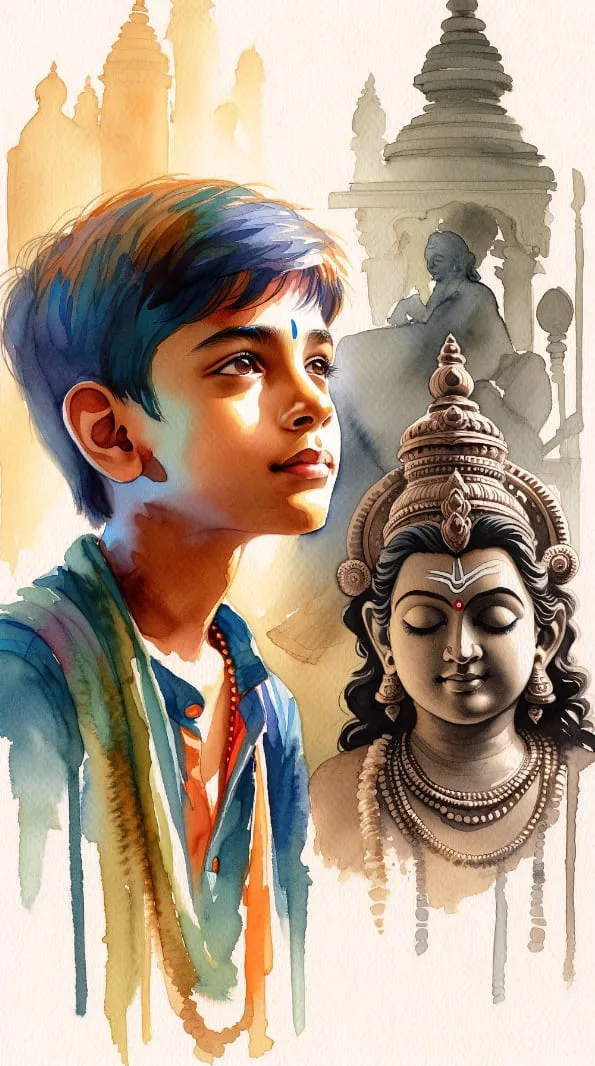
Dadi gestured to the deities on the wall. “When we sing God’s qualities—compassion, strength, love—we’re tuning our inner instrument to recognise these qualities everywhere. In Arjun’s tears, can we see the divine quality of love that makes loss hurt so much?”
“That’s… actually logical,” Tarkik said slowly. “Like training a neural network to recognise patterns.”
Dadi laughed. “If that helps you understand, yes! The brain science your generation knows supports what sages always knew—what we focus on grows in our perception.”
PREVIOUS: The Third Diya: Guru Pada Seva (Service to the Teacher)