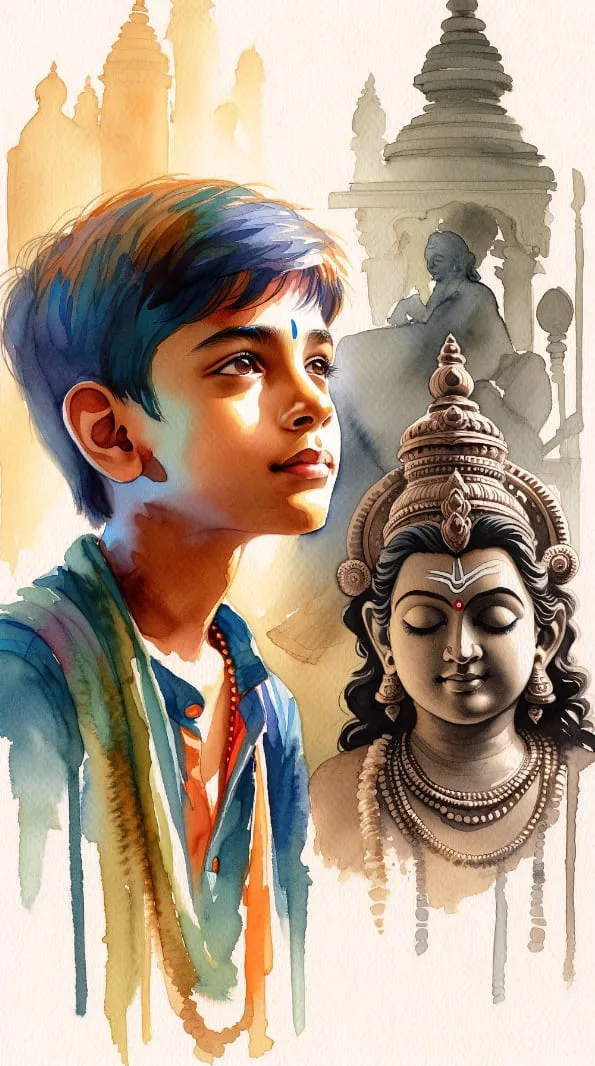
Walking home under the starlit sky, Tarkik felt a change within him. The legend wasn’t just about a breathing statue; it was about the breathing universe, the rhythm of nature, and the harmony of science and faith.
He understood now that the festival was more than just rituals; it was a celebration of life, a prayer for balance, and a reminder of the cosmic dance of creation and preservation.
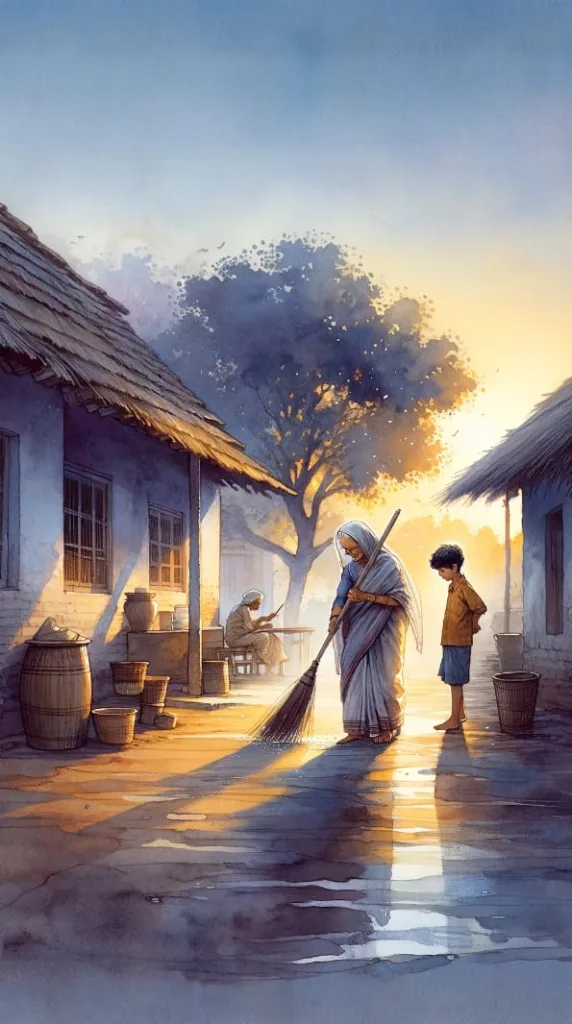
Returning home, Tarkik found Dadi engaged in a time-honoured ritual of cleansing and purification. As she swept the floors, her movements were graceful and deliberate, echoing an ancient rhythm. With each sweep, she softly chanted, “Ishwar aao, Dalidra jao,” inviting the divine presence of Bhagwan Vishnu into their home while banishing any traces of misfortune and negativity. This simple yet profound act was a living testament to her unshakeable faith and devotion, a ritual passed down through generations, symbolising the welcoming of prosperity and well-being.
In this moment, Tarkik realised the profound impact of understanding and respecting one’s cultural heritage. He saw firsthand how scepticism and belief could harmoniously coexist, intertwining like the strands of a rich fabric.
It dawned on him that science and spirituality, often seen as opposing forces, but in Sanatan Dharma, were part of the same cosmic dance, each lending depth and meaning to the other, creating a symphony of wisdom and reverence.
He understood that the breath of Vishnu was more than a myth; it was a metaphor for the life force that flows through the universe, through nature, and through every soul open to the world’s wonders.
“ॐ नमो भगवते वासुदेवाये,” he said a silent prayer.