
Shiva and Vishnu
Tarkik, curious about Lord Shiva’s role in the story, asked, “Dadi, what does Bhagwan Shiva represent?”
Dadi explained, “Lord Shiva represents the intellect and knowledge, the presiding deity of the Vigyanamaya kosha. Just as the Tamasic forces can control your mind and senses, they can also cloud your intellect, making it difficult for you to discern right from wrong. When this happens, the light of knowledge within you grows dim, and ignorance prevails. In such a situation, even the mighty Lord Shiva becomes helpless.”
“That’s why, in the story, the gods first seek help from Lord Shiva, but he directs them to Lord Vishnu, as the Tamasic influences have weakened the intellect.”
Tarkik listened attentively as Dadi continued, “Lord Vishnu represents the Jivatma, your individual soul. When your intellect is clouded by impurities and unable to strengthen the Sattvic Guna, your soul seeks refuge in the Atman, your true self. The Atman fights against the Tamasic Guna, but without the support of the intellect, mind, and senses, which are all under the influence of the Tamasic forces, the Jivatma finds itself overwhelmed.”
“The mind, under the sway of the Tamasic Guna, dictates the actions of the Jivatma, compelling it to act according to its desires. Exhausted and defeated, the Jivatma retreats to the cave of the heart, seeking solace. In the story, this is represented by Lord Vishnu seeking refuge in the cave of Badri Kedar.”
Samadhi / Tapà
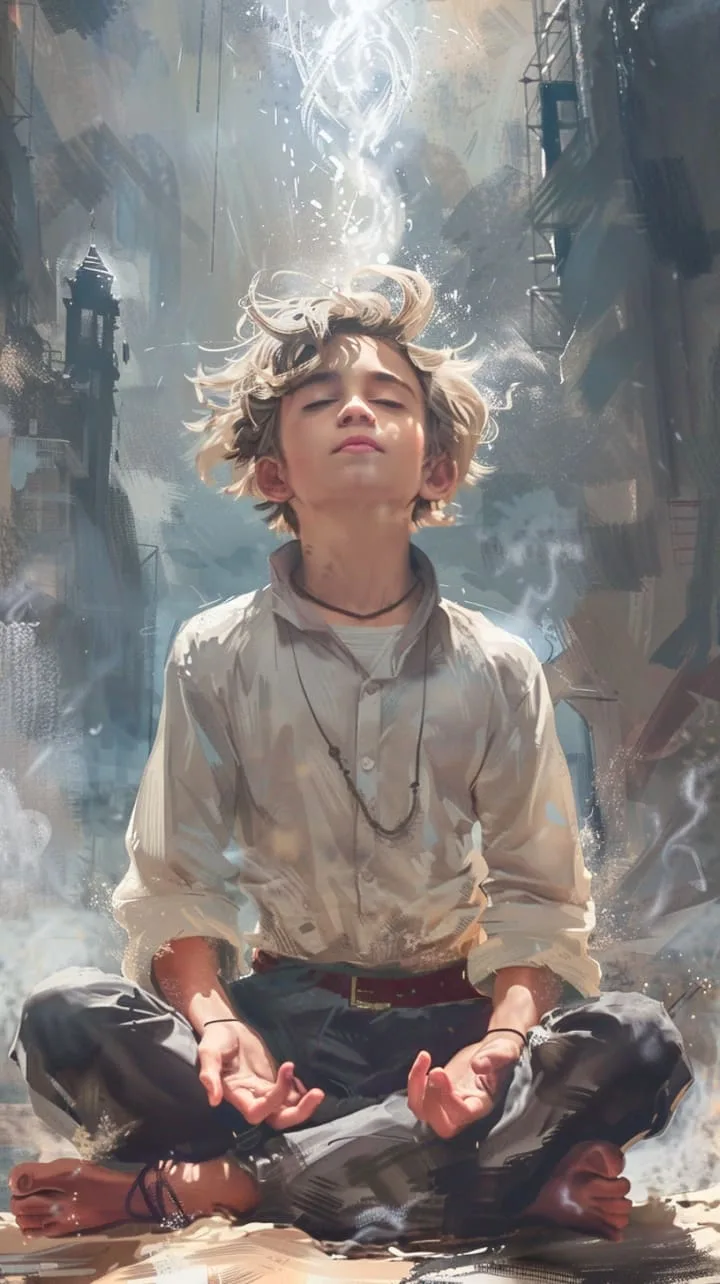
Dadi continued, “In the story, Lord Vishnu, representing the Jivatma, enters into a state of meditation, or Samadhi, in the cave of the heart, which is the abode of the Atman. This symbolises the Jivatma’s attempt to strengthen and empower the Sattvic Guna within.”
“Through meditation and austerity, or Tapà, the Sattvic Guna gains strength, and its powers begin to grow. As the Jivatma enters a deeper state of Samadhi, the Sattvic Shakti within the mind and senses becomes radiant and intense, like a bright flame.”
Tarkik listened, fascinated, as Dadi explained, “This Sattvic Shakti then bursts forth from the ten senses and the mind, the eleven centres of your being, and emerges as a divine radiance, separate from the Jivatma. In the story, this divine radiance is personified as Goddess Ekadashi, born from the ten senses and the mind.”
“So, Ekadashi Devi represents the awakening of the divine Sattvic Shakti within us through meditation and spiritual practices?” Tarkik asked, seeking confirmation.
Dadi nodded, pleased with Tarkik’s understanding. “Yes, my child. When you sincerely observe the Ekadashi Vrat and engage in spiritual practices, you create a conducive environment for the Sattvic Shakti to emerge and flourish. Just as Goddess Ekadashi arose from the eleven centers, the Sattvic Guna within you awakens and becomes a powerful force for transformation.”
“The story beautifully illustrates that by turning inward and focusing on your spiritual growth, you can tap into the immense potential of your own divine nature. The Sattvic Shakti, symbolized by Goddess Ekadashi, is the key to overcoming the negative influences of the Tamasic Guna and realizing your true self.”