As they climbed the stairs to their terrace, Daadi carrying her morning tea and Tarkik clutching his favourite red kite, she continued explaining. “You see, beta, what makes Makar Sankranti truly special is how it connects different aspects of life — the astronomical with the agricultural, the social with the spiritual, and the scientific with the traditional.”
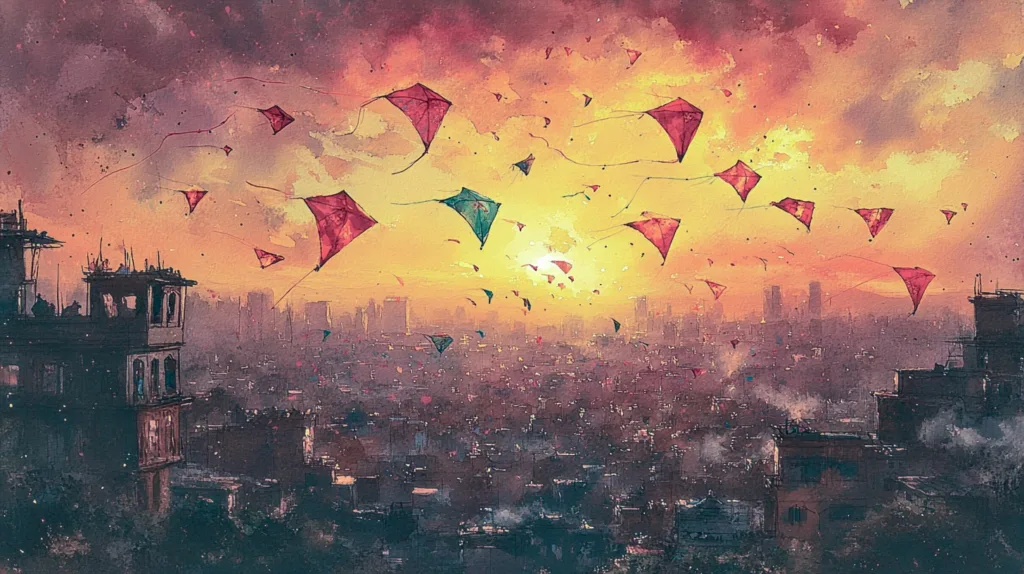
The terrace was already buzzing with activity. Neighbours had gathered with their kites, and the air was filled with friendly competition and laughter. Tarkik noticed his best friend Rohit struggling with his kite string and went to help him.
“You know, Daadi,” Tarkik called over his shoulder as he helped Rohit, “it’s amazing how our ancestors wrapped so many important lessons into one festival.”
“Indeed,” Daadi smiled, watching her grandson share his knowledge with his friend. “And speaking of important lessons, did you know that even the tradition of flying kites has a deeper meaning?”
Both boys turned to her with interest, their kites temporarily forgotten.
“The higher you want your kite to fly, the stronger your string needs to be, and the better you need to understand the wind.” She gestured to the kites dancing in the sky. “It’s like life itself – success requires both strength and flexibility, understanding when to pull and when to give slack.”
As the morning progressed, more neighbours joined them on the terrace. Daadi shared her til-gur laddoos with everyone, and Tarkik noticed how the simple act of sharing sweets brought people together, just as she had explained. Even Mr Sharma and Mr Verma, who had been arguing about their parking spaces for months, were now helping each other untangle their kite strings.
“Daadi,” Tarkik said quietly, “I think I understand now why Makar Sankranti is so important. It’s not just about the sun changing its path or flying kites. It’s about changing ourselves too, isn’t it?”
“You’re absolutely right, beta.” Daadi wrapped her shawl tighter against the winter breeze. “Just as the sun’s movement marks a new beginning in nature, this festival gives us a chance for new beginnings in our lives. It reminds us to let go of old grievances, like Surya and Shani, and to share sweetness with others.”
Later that day, as they sat on their balcony watching the last few kites in the darkening sky, Tarkik reflected on everything he had learned. The festival he had previously thought of as just another holiday had revealed itself as a complex tapestry of science, spirituality, and social wisdom.
“Daadi,” he said, helping her collect the prayer items, “thank you for teaching me about Makar Sankranti. I never knew there was so much science behind our traditions.”
“That’s the beauty of our culture, beta. Our ancestors were not just religious; they were also great scientists and social thinkers. They understood that true wisdom comes from seeing the connections between different aspects of life.”
Tarkik smiled, knowing that from now on, every Makar Sankranti would be more than just a festival for him. It would remind him of the day he began to understand the deep wisdom hidden in Sanatan traditions, all thanks to his grandmother’s stories and teachings.
Frequently Asked Questions About Makar Sankranti
Discover the fascinating blend of science, mythology, and tradition behind India’s unique solar calendar festival.
Why is Makar Sankranti celebrated on the same date every year when other Hindu festivals change dates?
Unlike other Hindu festivals that follow the lunar calendar, Makar Sankranti follows the solar calendar. The Sun begins its northward journey in the sky, entering the zodiac sign of Capricorn (Makar Rashi). This astronomical event is so precise that it happens on January 14th or 15th every year, making it one of the few Indian festivals that falls on a fixed date in the English calendar.
What exactly is Uttarayan?
Uttarayan is the sun’s six-month journey northward. While the sun actually moves through space carrying our whole solar system as we orbit around the center of the Milky Way galaxy, the northward journey we see during Uttarayan comes from Earth’s tilted axis and our planet’s position in its orbit around the sun.
How does Earth’s tilt create the seasons and relate to Makar Sankranti?
Earth’s axis is tilted, and this tilt combined with our planet’s orbit around the sun creates our seasons. Makar Sankranti marks the beginning of the sun’s apparent northward journey, bringing longer days and the promise of spring. This astronomical alignment connects perfectly with the harvest season.
What is the story of Surya and Shani Dev that relates to Makar Sankranti?
The Sun God Surya had a son, Shani Dev, born to his second wife Chhaya (shadow). Because Chhaya performed intense penance in the sun during pregnancy, Shani was born with a dark complexion – like how melanin protects our skin from the sun. Surya doubted whether Shani was truly his son because of his dark appearance, creating a rift between them.
How does Makar Sankranti represent reconciliation between Surya and Shani?
On Makar Sankranti, Surya enters Makar Rashi, which is ruled by Shani. It’s like a father visiting his son’s house, setting aside his ego to make amends. This teaches us about overcoming prejudices and the importance of family reconciliation.
Why are black items considered auspicious on Makar Sankranti?
Black til seeds, black urad dal, and even black clothes are considered auspicious on this day to honor Shani Dev’s dark complexion. This teaches us that beauty comes in all colors and helps us overcome prejudices based on appearance.
What is the significance of til (sesame) and gur (jaggery) in Makar Sankranti?
These aren’t just delicious treats – they’re perfect winter foods. Sesame seeds generate heat in the body, and jaggery provides energy during cold months. The tradition of sharing til-gur laddoos with neighbours follows the saying “til-gur ghya, god god bola” (take these sweets and speak sweetly), reminding us to maintain harmony in our community.
What is the deeper meaning behind kite flying on Makar Sankranti?
The higher you want your kite to fly, the stronger your string needs to be, and the better you need to understand the wind. It’s like life itself – success requires both strength and flexibility, understanding when to pull and when to give slack.
How is Makar Sankranti celebrated differently across India?
Each region celebrates with its own unique traditions:
- Tamil Nadu: Pongal – families cook sweet rice in new clay pots until it overflows, symbolizing abundance
- Punjab: Lohri – lighting bonfires and singing folk songs
- Assam: Magh Bihu – communities come together for feasts and cultural events
- Karnataka: Women exchange ‘Ellu Bella’ (sesame seeds and jaggery mixture) with at least ten families
- Local regions: Special khichdi is prepared from new grain
What are the traditional morning rituals of Makar Sankranti?
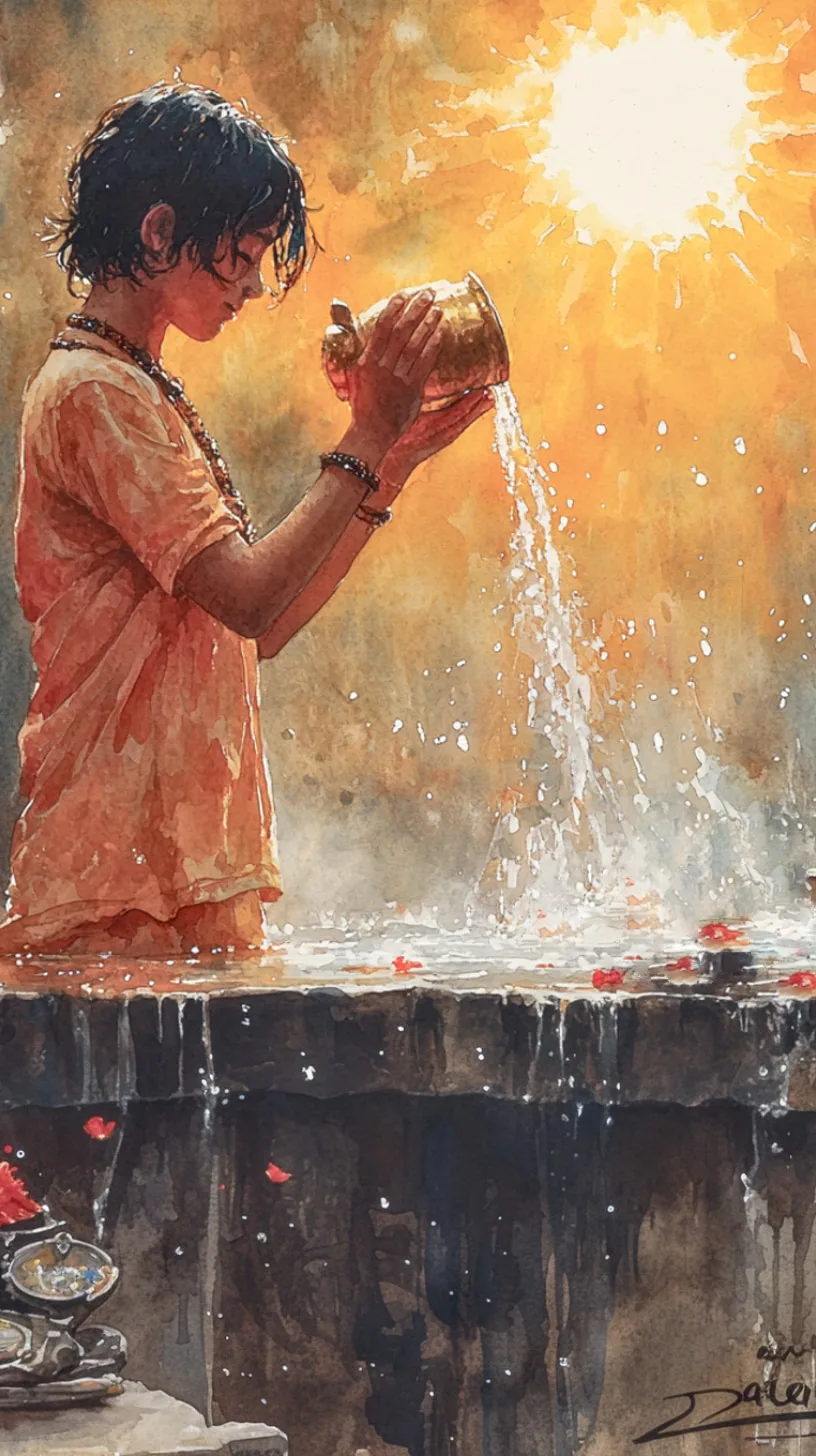
The morning puja includes offering arghya (water offering) to Surya Dev while chanting “Om Suryay Namah”, “Om Adityay namah”, “Om Bhaskaraye namah”, and “Om Grihni Suryaya Namah”. Fresh flowers, til, gur, new clothes, and khichdi made from the latest harvest are offered.
What life lesson does the sun teach us on Makar Sankranti?
Just as the sun nurtures all life without discrimination, we too should spread light and warmth in our community. The sun doesn’t withhold its rays from anyone, rich or poor, good or bad.
How did ancient Indians combine astronomy with festivals?
Our ancestors were not just religious; they were also great scientists and social thinkers. They understood that true wisdom comes from seeing the connections between different aspects of life – the astronomical with the agricultural, the social with the spiritual, and the scientific with the traditional.
What makes Makar Sankranti special compared to other festivals?
Makar Sankranti connects different aspects of life in one celebration. It’s simultaneously an astronomical event, a harvest festival, a social gathering, and a spiritual practice. This multi-dimensional approach shows the depth of ancient Indian understanding.