Once upon a time, in the ancient land of India, there was a beautiful city called Mithila. In this city lived a wise and just king named Janaka. He had a daughter named Sita, renowned throughout the land for her grace and kindness.
Now, Sita was not just any princess; it was said that she was found by King Janaka while ploughing a field, emerging from the earth as if a gift from the gods. As she grew, her beauty and virtues became the talk of the kingdoms far and wide.
One day, King Janaka decided it was time for Princess Sita to marry. But he wanted someone worthy of her, a prince as virtuous and strong as she was beautiful. So, he announced the Sita Swayamvar, a grand event where princes and kings from all over would come to win Sita’s hand in marriage.
The challenge was to string a mighty bow, a celestial weapon of the god Shiva, which was so heavy and powerful that none could even lift it. Princes and kings tried and failed, their efforts proving futile against the divine bow.
The bow was not ordinary; it was a celestial weapon gifted to King Janaka’s ancestors by Shiva himself. This bow was a symbol of immense strength and divine power, so heavy and powerful that it was considered unstringable by mere mortals. It required not only physical strength but also a pure heart and love and respect for all beings- symbolising a deep connection with the divine.
Many tried and failed, for they lacked the combination of strength, virtue, and divine favour. Then arrived Prince Rama of Ayodhya, accompanied by his brother Lakshmana. Rama was not just a prince; he was an avatar of Lord Vishnu, sent to earth to uphold dharma, the cosmic order. Rama was known not just for his princely stature but also for his righteousness and strength and his gentle manner. When Rama approached the bow, there was a hush in the crowd. With a calm demeanour, he lifted the bow effortlessly and strung it, breaking it in two.
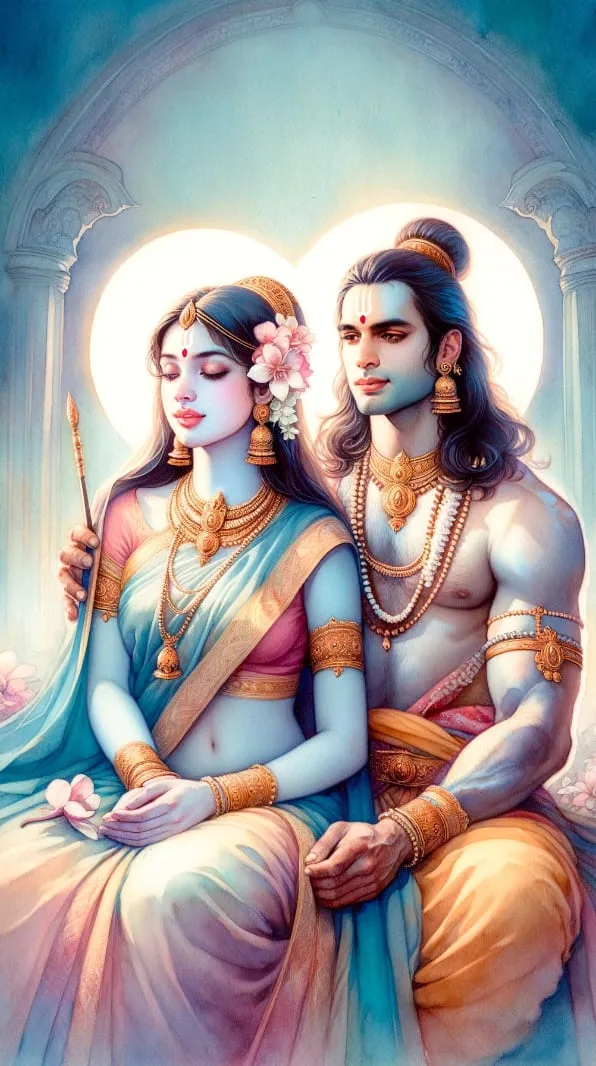
The hall erupted in cheers and applause. Sita, who had watched silently, walked up to Rama with a garland in her hands. As she garlanded him, marking him as her chosen husband, there was a sense of magic in the air, as if the gods themselves were blessing this union.
And so, Rama and Sita were wed in a grand ceremony, promising to be together in happiness and sorrow, in strength and weakness. Their love story became legendary, teaching generations the values of love, respect, and the importance of inner strength and virtue.