

The setting sun painted Varanasi’s sky in brilliant oranges and pinks on this auspicious day in Jyeshtha month (June). Seven-year-old Deepu sat cross-legged on the courtyard floor, carefully shaping wet clay into a diya for tomorrow’s Ganga Dussehra festival – one of the most important Hindu festivals celebrating the descent of River Ganga to Earth.
“Mine will be the brightest on the river!” he announced to his six-year-old sister, Diya.
“No, mine will!” Diya giggled, showing off her peacock-decorated lamp.
Their grandmother, Nani, smiled from her wooden stool, expertly molding her own diyas. “Both will shine beautifully on Mother Ganga,” she said warmly.
Deepu jumped up excitedly. “I’ll get the paints!” But his foot caught the cloth, and—CRACK! His special diya lay broken in three pieces.
“My diya!” Tears filled Deepu’s eyes. “Now I have nothing for Ganga Ma tomorrow!”
Nani gathered the broken pieces gently. “Beta, come sit with me. Let me tell you why even a broken diya can carry the brightest light.”

The children snuggled close as temple bells chimed in the distance, ready for their favorite Indian mythology story.
“Long ago,” Nani began this popular Hindu festival story for children, “there lived King Sagara with sixty thousand proud sons. When they falsely accused a sage of theft, he turned them all to ash! Their souls needed sacred Ganga’s water to find peace, but she lived high in heaven.”
“How could river water come from heaven?” Deepu wondered aloud.
“That’s where brave Prince Bhagiratha enters our story,” Nani continued this ancient Indian cultural tale, carefully repairing Deepu’s diya as she spoke. “He stood on one leg in the Himalayas for years, praying to Lord Brahma without eating or sleeping properly. Sun burned him, rain soaked him, but he never gave up!”
“I can’t even stand on one leg for a minute!” Diya exclaimed, trying and wobbling.
“Finally, Lord Brahma agreed to send Ganga to Earth. But Ganga worried—’I’m too powerful! My force will break the Earth!'”
“So Bhagiratha prayed to Lord Shiva,” Nani explained this important part of Hindu mythology for kids. “The great god agreed to catch Ganga in his matted hair, slowing her flow. When Ganga leaped from heaven, roaring like a thousand lions, Lord Shiva caught her gently in his locks. She became many gentle streams, bringing life instead of destruction.”

As Nani finished the ancient tale, Deepu’s eyes grew heavy. In his dream, he found himself floating on the Ganga in a giant, glowing diya!
“Welcome!” the diya spoke. “Look around you!”
Thousands of diyas sparkled like stars on the water. Fish jumped up, greeting him cheerfully. But as they floated downstream, the water turned murky. People were throwing garbage into the river, and Deepu’s diya began to dim.
“We must clean our Mother!” Deepu declared. Suddenly, glowing children appeared on the riverbanks. Together, they collected garbage while Deepu taught them Nani’s song:
“Ganga Ma, Ganga Ma, pure and bright,
We’ll keep you clean with all our might!”
The river began glowing golden. A beautiful lady in a flowing blue saree appeared—Mother Ganga herself!
“Bless you, child,” she smiled. “You understand that I give life to all, but need your help to stay pure.”

“Deepu, wake up!” Nani gently shook him as morning arrived. “Look!” She held up his diya—perfectly repaired and glowing with inner light. “Broken things become stronger when fixed with love.”
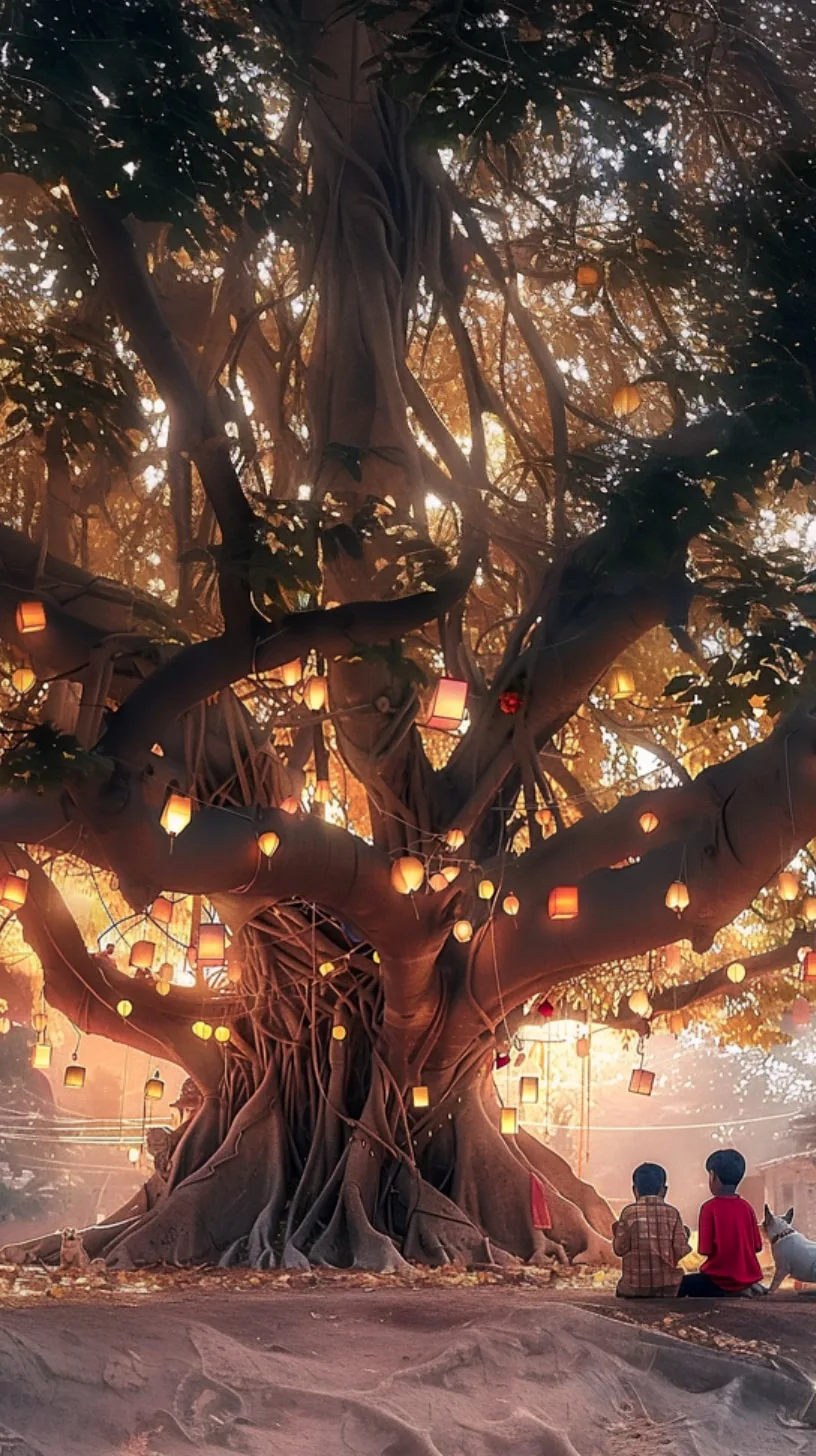
At the evening Ganga Dussehra celebrations, the Varanasi ghats buzzed with excitement for this sacred June Hindu festival. Marigold garlands decorated the steps, and incense perfumed the air. As sunset approached, hundreds gathered at the water’s edge with their diyas for the traditional Ganga Dussehra rituals.
“Remember Bhagiratha’s lesson from our Indian mythology story?” Nani asked.
“Never give up!” Deepu said. “And we must keep Ganga clean!”
When everyone released their diyas into the river for Ganga Dussehra, Deepu watched his repaired lamp float perfectly, glowing brighter than the rest. He closed his eyes and promised: I will always protect you, Ganga Ma.
The priests began the grand aarti, moving enormous brass lamps in circles as the crowd sang: “Om Jai Gange Mata…”The river transformed into a flowing path of lights, each flame a prayer, a promise.
Walking home through lamp-lit streets, Deepu announced, “Next year, let’s organize a river cleaning drive before Ganga Dussehra!”
“Yes!” Diya agreed. “We’ll teach everyone your dream song!”
“The best traditions,” Nani said proudly, “are ones that help others. Bhagiratha himself would be proud.”
That night, Deepu understood that his broken and repaired diya had taught him something precious through this Ganga Dussehra story—sometimes we need to break a little to become stronger, and sometimes we must work hard like Bhagiratha to bring beauty into the world.
Outside, the eternal Ganga flowed on, carrying not just water but the hopes and promises of millions celebrating this Jyeshtha month festival, including one small boy’s big promise to protect the river that gives life to all.
This Hindu festival story for children teaches about Ganga Dussehra, celebrated in June (Jyeshtha month), through the inspiring Bhagiratha story and modern environmental awareness.
Frequently Asked Questions About Ganga Dussehra
Discover the spiritual significance, traditions, and celebrations of this sacred Hindu festival honoring Mother Ganga.
What is Ganga Dussehra?
Ganga Dussehra is a Hindu festival celebrated in June (Jyeshtha month) commemorating the descent of River Ganga from heaven to Earth. It marks the day when Lord Shiva caught Ganga in his hair to control her mighty flow, making her gentle enough to flow on Earth.
When is Ganga Dussehra celebrated in 2024 and 2025?
Ganga Dussehra falls on the 10th day (Dashami) of the waxing moon in Jyeshtha month. In 2024, it was celebrated on June 16, and in 2025, it will be celebrated on June 6. The date varies each year according to the lunar calendar.
Who was King Bhagiratha and why is he important?
King Bhagiratha was the legendary king who brought Ganga to Earth through his severe penance. He meditated for thousands of years to please Lord Brahma and then Lord Shiva, so that Ganga could descend to Earth and purify the ashes of his 60,000 ancestors, allowing their souls to reach heaven.
How do people celebrate Ganga Dussehra?
People celebrate Ganga Dussehra by taking holy dips in the Ganga river, floating diyas (oil lamps) on the water, performing aarti ceremonies, offering flowers and prayers, and participating in cultural programs. Many devotees visit famous ghats in Varanasi, Haridwar, and Rishikesh for special celebrations.
What is the significance of floating diyas on Ganga Dussehra?
Floating diyas (oil lamps) on the Ganga represent offering light and prayers to Mother Ganga. Each diya carries the wishes, gratitude, and promises of devotees. The lights floating on water create a beautiful sight and symbolise the removal of darkness and ignorance from life.
How can I teach my child about Ganga Dussehra?
You can teach children about Ganga Dussehra through storytelling (like the Bhagiratha story), making clay diyas together, explaining the importance of keeping rivers clean, visiting a local river or water body to understand water conservation, and reading illustrated books about Hindu festivals. Make it interactive and age-appropriate.
What are the other names for Ganga Dussehra?
Ganga Dussehra is also known as Gangavataran (descent of Ganga), Ganga Jayanti (birth of Ganga on Earth), and Dashahara. In some regions, it’s called Ganga Mahotsav. The festival is particularly significant in North Indian states along the Ganga river.
Which places are best to visit during Ganga Dussehra?
The best places to experience Ganga Dussehra are Varanasi (Dashashwamedh Ghat), Haridwar (Har Ki Pauri), Rishikesh, Allahabad (Prayagraj), and Gangotri. These cities organize special aarti ceremonies, cultural programs, and grand celebrations along the ghats.
What is the environmental message of Ganga Dussehra?
Ganga Dussehra reminds us to protect and preserve our rivers. While we celebrate Ganga as a goddess, we must also keep her waters clean by not polluting, participating in river cleaning drives, using eco-friendly materials for rituals, and teaching children about water conservation and environmental responsibility.
Are there any special mantras or prayers for Ganga Dussehra?
Yes, the most common prayer is the Ganga Aarti “Om Jai Gange Mata.” Other mantras include “Namami Gange” and “Ganga Stotram.” Simple prayers in any language expressing gratitude to Mother Ganga and promising to keep her clean are equally meaningful, especially for children.